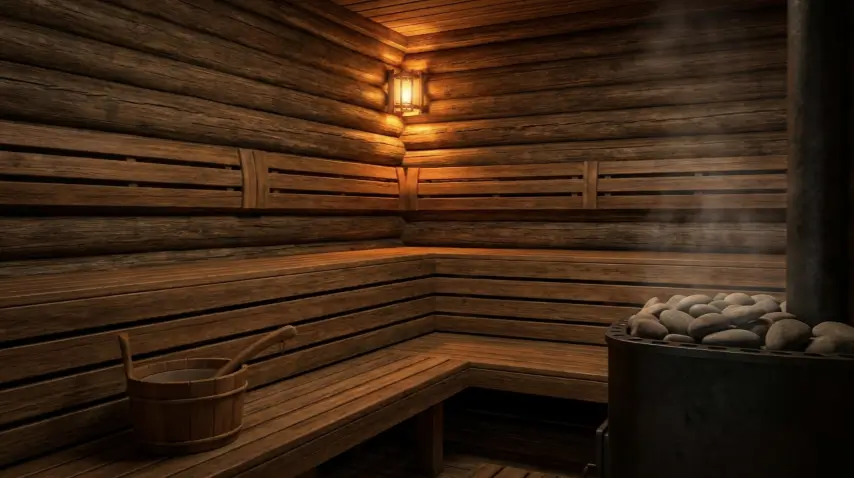
Cedar costs more, smells better, and weighs less, while heat-treated hemlock costs 20 to 35 percent less per board foot and comes close to matching cedar’s rot resistance thanks to the kiln process that changes its cell structure. Neither wood is objectively wrong for a sauna. The right choice depends on whether the budget priority is lowest total material cost or the classic aromatic cedar experience most people picture when they think of a sauna. Here are the specific tradeoffs, question by question.
What’s the Actual Difference Between the Two Woods?
Western red cedar is a naturally rot- and insect-resistant softwood, prized for centuries in outdoor construction because of oils in the wood itself that resist decay without any chemical treatment. Heat-treated, or thermally modified, hemlock starts as a much less naturally durable wood and gets processed in a high-heat kiln that alters its cellular structure, driving out sugars that would otherwise feed rot and fundamentally changing how the wood interacts with moisture. The two arrive at similar durability through completely different paths: cedar because of what it naturally is, hemlock because of what a manufacturing process does to it.
Which Wood Costs Less on a Real Budget?
Heat-treated hemlock typically runs 20 to 35 percent less than cedar per board foot, and on a full cabin’s worth of paneling, benches, and trim, that gap can add up to several hundred dollars of savings on a two to four person build. Regional lumber pricing shifts this range somewhat, since cedar availability varies more by area than hemlock does, but hemlock holds its cost advantage in most markets. For a buyer trying to hit a firm number, choosing hemlock over cedar is one of the largest single savings available without changing heater type, cabin size, or electrical scope.
Which Wood Holds Up Better Against Moisture and Rot?
Cedar’s natural oils give it a slight long-term edge in very wet or humid climates, particularly for exterior cladding exposed to years of direct rain. Properly kiln-treated hemlock performs close to that level for interior use and for most climates, since the thermal modification process is specifically designed to reduce the wood’s ability to absorb and retain moisture. The gap between the two narrows further when either wood gets the basic maintenance a sauna needs regardless of species: airflow after each session, no sealants trapping moisture in, and a maintained exterior finish on any outdoor-facing surface.
Which Wood Is Easier to Work With During Installation?
Cedar is lighter and cuts, drills, and sands more forgivingly, which matters for anyone assembling a prefab kit themselves rather than hiring it out. Heat-treated hemlock is somewhat more brittle after the kiln process, meaning it can splinter or chip at panel edges if handled roughly during assembly, and it benefits from sharper blades and a bit more care around fasteners. Neither difference is dramatic enough to rule hemlock out for a DIY build, but a first-time assembler working with hemlock should expect to go a little slower and be more deliberate near corners and edges.
See also: Business Formation in IFZA: A Founder’s Guide to Efficient UAE Setup
Does One Smell Meaningfully Better Than the Other?
Yes, and this is the tradeoff hemlock buyers give up most consciously. Cedar’s aroma, released as the wood heats, is part of the classic sauna sensory experience for a lot of users, and it’s the single most common reason buyers pay the premium for cedar even when hemlock would perform nearly as well structurally. Heat-treated hemlock has a much milder scent, sometimes described as faintly toasted or nutty from the kiln process rather than the sharp cedar smell, which some users actually prefer if they find raw cedar overpowering in an enclosed space.
Does Sourcing or Availability Change the Comparison?
Cedar supply and pricing swing more by region than hemlock does, since old-growth western red cedar stands are more limited and demand from other outdoor building trades competes for the same lumber. Hemlock is a faster-growing, more widely available species to begin with, and the thermal modification step happens at a processing facility rather than depending on a scarce raw material, which tends to keep its pricing steadier year to year. A buyer shopping during a period of high cedar demand, which tends to track broader outdoor construction and decking trends, may find the price gap between the two woods widens temporarily beyond the usual 20 to 35 percent range, making hemlock an even more compelling budget option in that particular season.
Which Wood Should a Budget-Focused Buyer Actually Choose?
For a buyer where total cost is the deciding factor and the classic cedar aroma is not a priority, heat-treated hemlock is a reasonable and well-tested choice. For a buyer who wants the traditional sensory experience and has some flexibility in the budget, cedar remains the reference standard for a reason. A middle option worth considering is mixing the two: cedar on benches and backrests where skin contact and scent matter most, hemlock on wall panels and less visible structural elements. Comparing both options on an actual model rather than guessing from a swatch is worth doing before ordering, and a page like SweatDecks.com lists wood species by model, which makes it possible to see exactly which parts of a given cabin use which wood before committing to one.
Does the Wood Choice Affect What the Health Research Shows?
No, and this is worth being direct about. The available research on sauna use and cardiovascular outcomes, drawn largely from Finnish cohort studies, does not distinguish by wood species at all; it tracks frequency and duration of sauna sessions, not what the cabin is built from. A large cohort study found that men who used a sauna four to seven times a week had lower rates of fatal cardiovascular events and all-cause mortality than men who used one once a week, an association that held after adjusting for other risk factors. A 2018 review in Mayo Clinic Proceedings summarized similar associations. Wood choice affects cost, durability, and the sensory experience; it has no documented bearing on whatever health association a regular sauna habit might carry.
Frequently Asked Questions
Is heat-treated hemlock as durable as cedar in a sauna? Close to it. The kiln process gives hemlock rot and moisture resistance near cedar’s natural level, though cedar still has a slight edge for long-term exposure in very wet climates.
How much less does heat-treated hemlock cost than cedar? Typically 20 to 35 percent less per board foot, which can mean several hundred dollars in savings on a full cabin.
Does hemlock need any special maintenance cedar doesn’t? Not really. Both need the same interior care: no soap or sealant, regular airflow, occasional light sanding. Hemlock can splinter if sanded too aggressively across the grain.
Can cedar and heat-treated hemlock be mixed in the same cabin? Yes. Many budget builds use cedar for benches and backrests and hemlock for wall paneling to control overall cost.
References
- Association between sauna bathing and fatal cardiovascular and all-cause mortality events, JAMA Internal Medicine, 2015
- Cardiovascular and Other Health Benefits of Sauna Bathing: A Review of the Evidence, Mayo Clinic Proceedings, 2018
- Joint associations of sauna bathing and cardiorespiratory fitness on cardiovascular and all-cause mortality risk, Annals of Medicine, 2018
By Nina Brandt