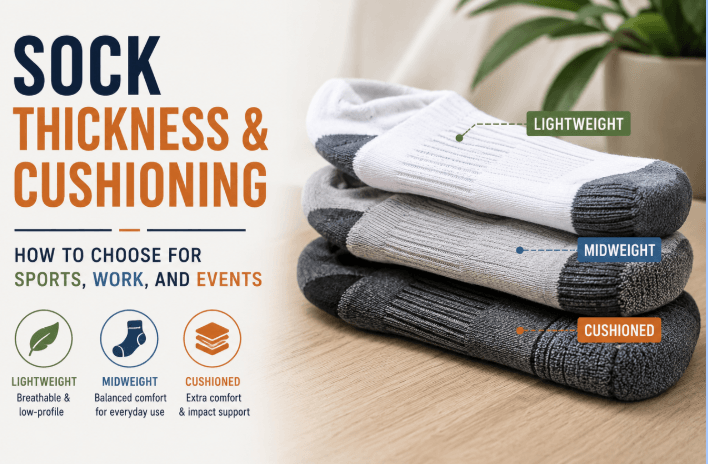
Sock thickness affects comfort, warmth, shoe fit, and product positioning. A thicker sock may feel more supportive, but it may not fit every shoe. A thinner sock may feel breathable, but it may not provide enough cushioning for active use.
For custom sock orders, thickness should match the activity and audience. The wrong thickness can make an otherwise good design difficult to wear.
Lightweight Socks
Lightweight socks are often used for warm weather, casual daily wear, low-profile shoes, and event orders that need a cleaner fit. They may weigh around 25–40g per pair, depending on size and material.
This type of sock works well when the buyer wants something easy to wear with sneakers or casual shoes. However, lightweight socks may not feel supportive enough for sports, boots, or long standing hours.
Midweight Socks
Midweight socks are often the safest option for general custom orders. They can provide enough comfort without feeling too bulky. A crew sock in this range may weigh around 40–65g per pair, depending on height, cushioning, and yarn.
For buyers planning custom socks, midweight construction can work well for teams, gyms, schools, company gifts, and event merchandise because it balances comfort and usability.
Cushioned Socks
Cushioning can be added to the sole, heel, or toe area. It improves comfort for sports, walking, outdoor activities, or work use. However, extra cushioning also increases thickness.
A fully cushioned sock may feel comfortable, but it can make shoes feel tighter. For this reason, buyers should consider the footwear. Athletic shoes, boots, and casual sneakers may all need different sock thickness.
Thickness and Logo Appearance
Thicker socks may have a more textured surface, which can affect small design details. If the sock uses jacquard graphics, the buyer should confirm whether the logo will stay clear after stretch.
A thinner sock may show more detail, but it may also feel less substantial if the material is weak. The goal is balance.
Match Thickness With Sock Type
No-show socks are usually lighter. Ankle socks can be light or midweight. Crew socks are flexible and can support more cushioning. Knee-high socks need careful thickness planning because too much weight can affect comfort and fit.
Buyers comparing different types of socks can choose the height first, then decide whether lightweight, midweight, or cushioned construction makes sense.
Common Buying Mistakes
One mistake is choosing thick socks only because they feel more valuable. If the target users wear tight shoes, the socks may be uncomfortable.
Another mistake is choosing lightweight socks for active use without enough heel or sole support.
A third mistake is ignoring season. A thick sock may be useful in winter but less practical for summer campaigns.
Conclusion
Sock thickness should be chosen based on real use. Lightweight socks are better for warm weather and casual shoes. Midweight socks are safer for general custom orders. Cushioned socks are stronger for sports, work, and long wear.
The best custom sock is not always the thickest one. It is the one that fits the activity, shoe type, climate, and customer expectations.